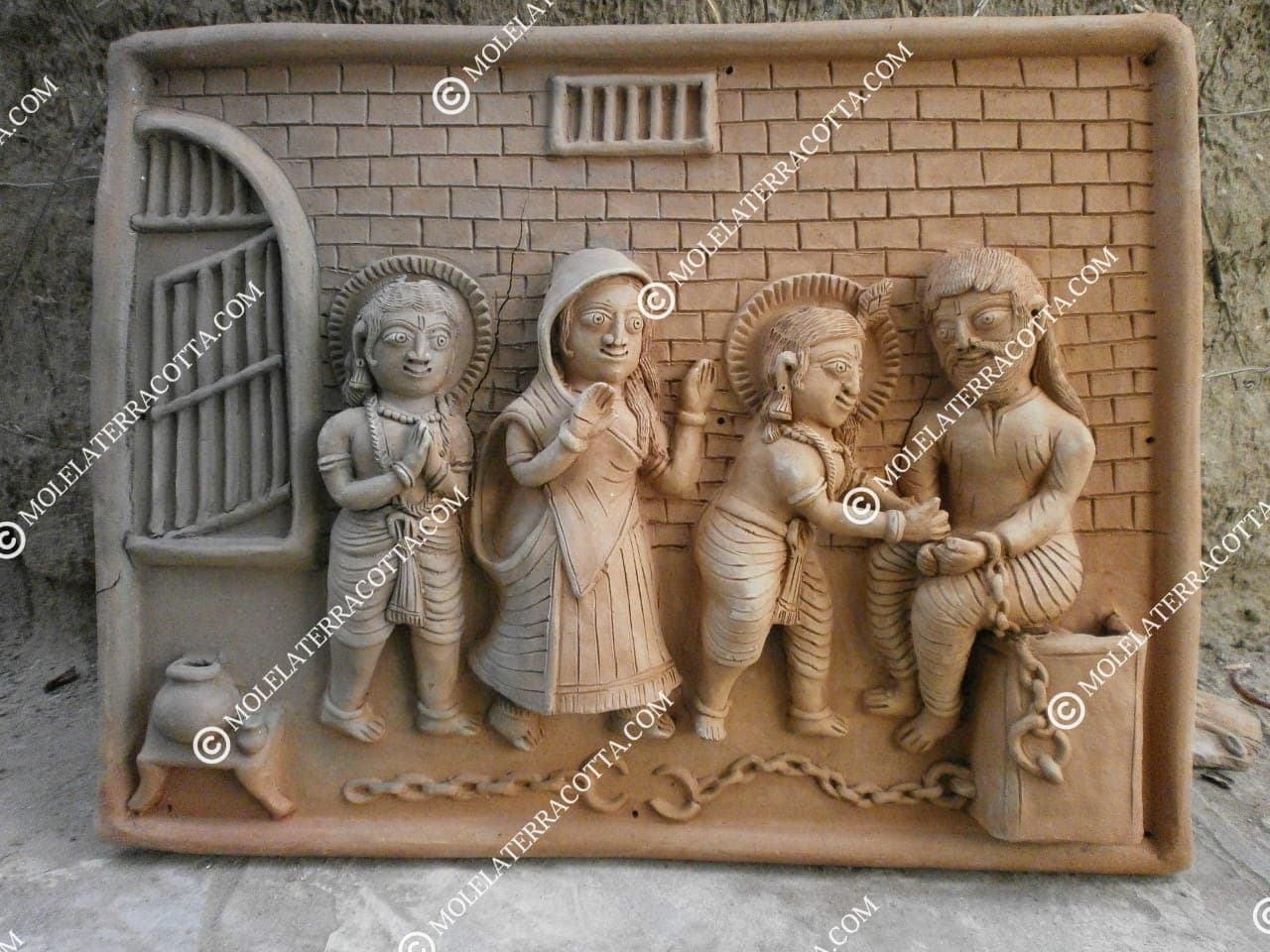
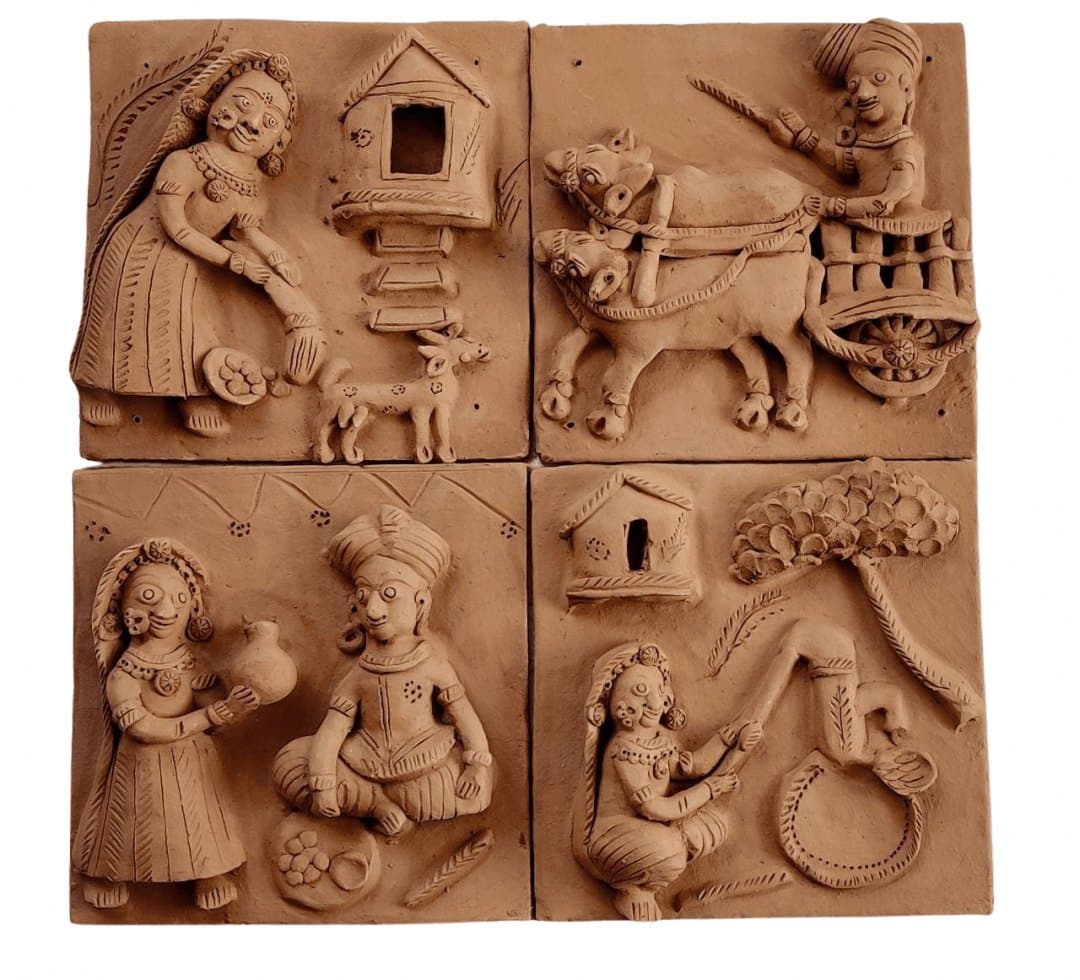
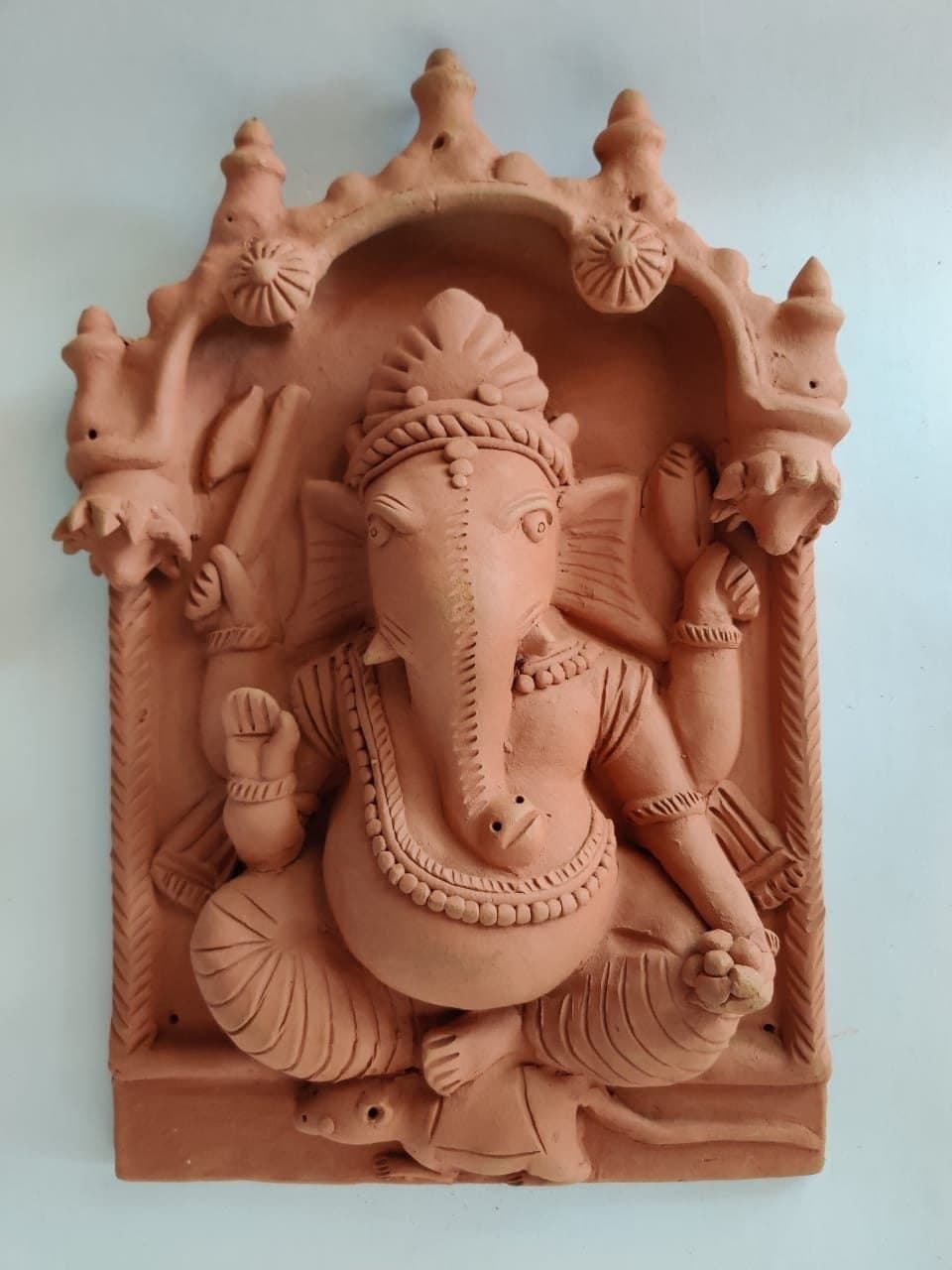
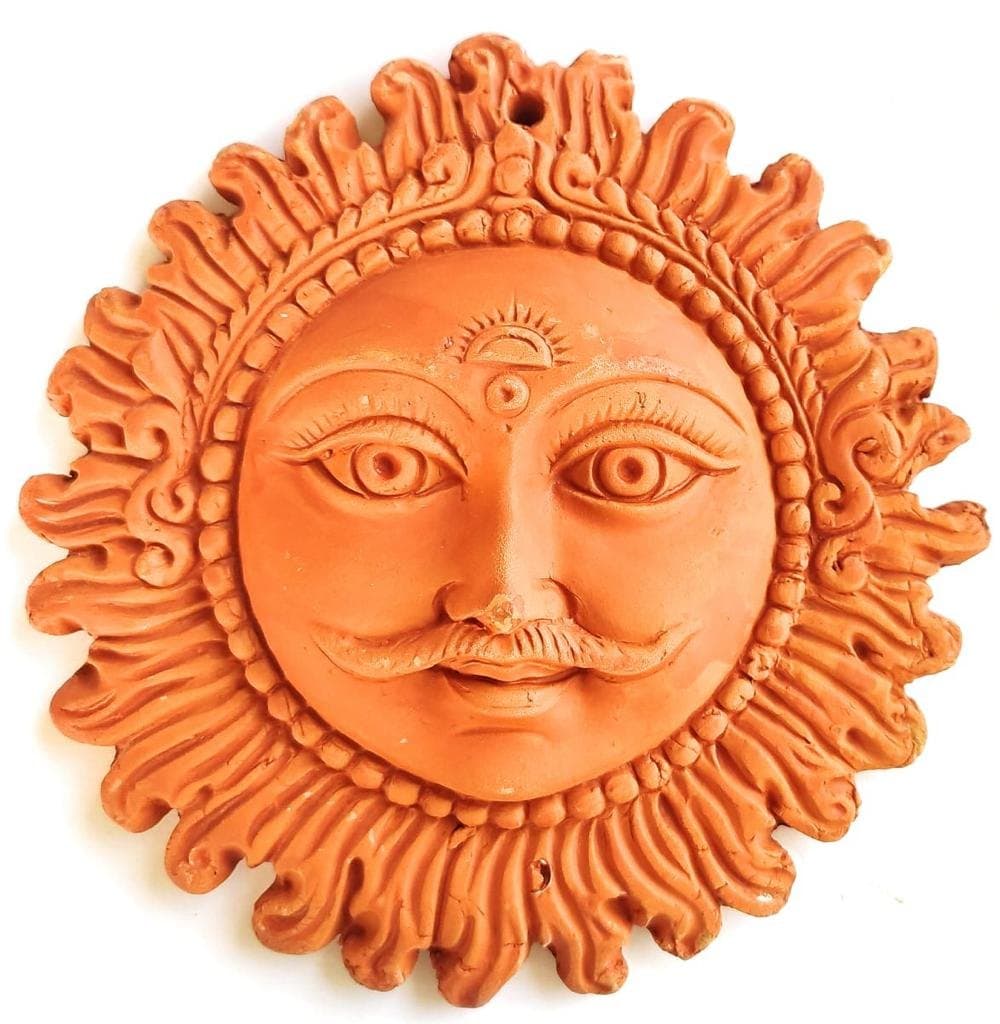
Handcrafted Molela terracotta plaques, fired in our village kiln
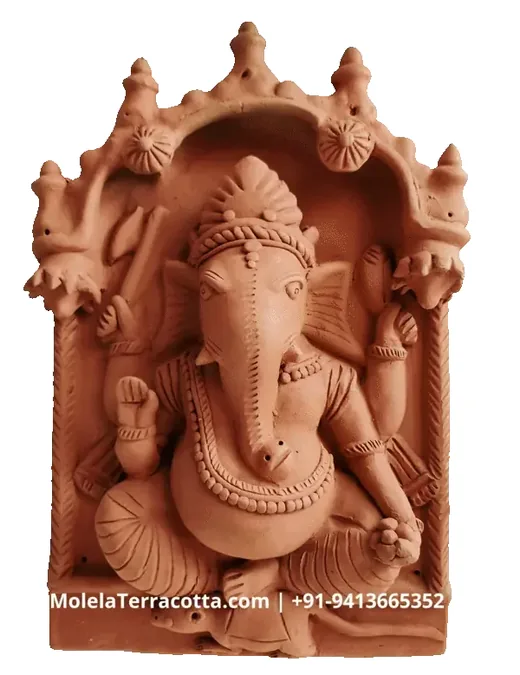
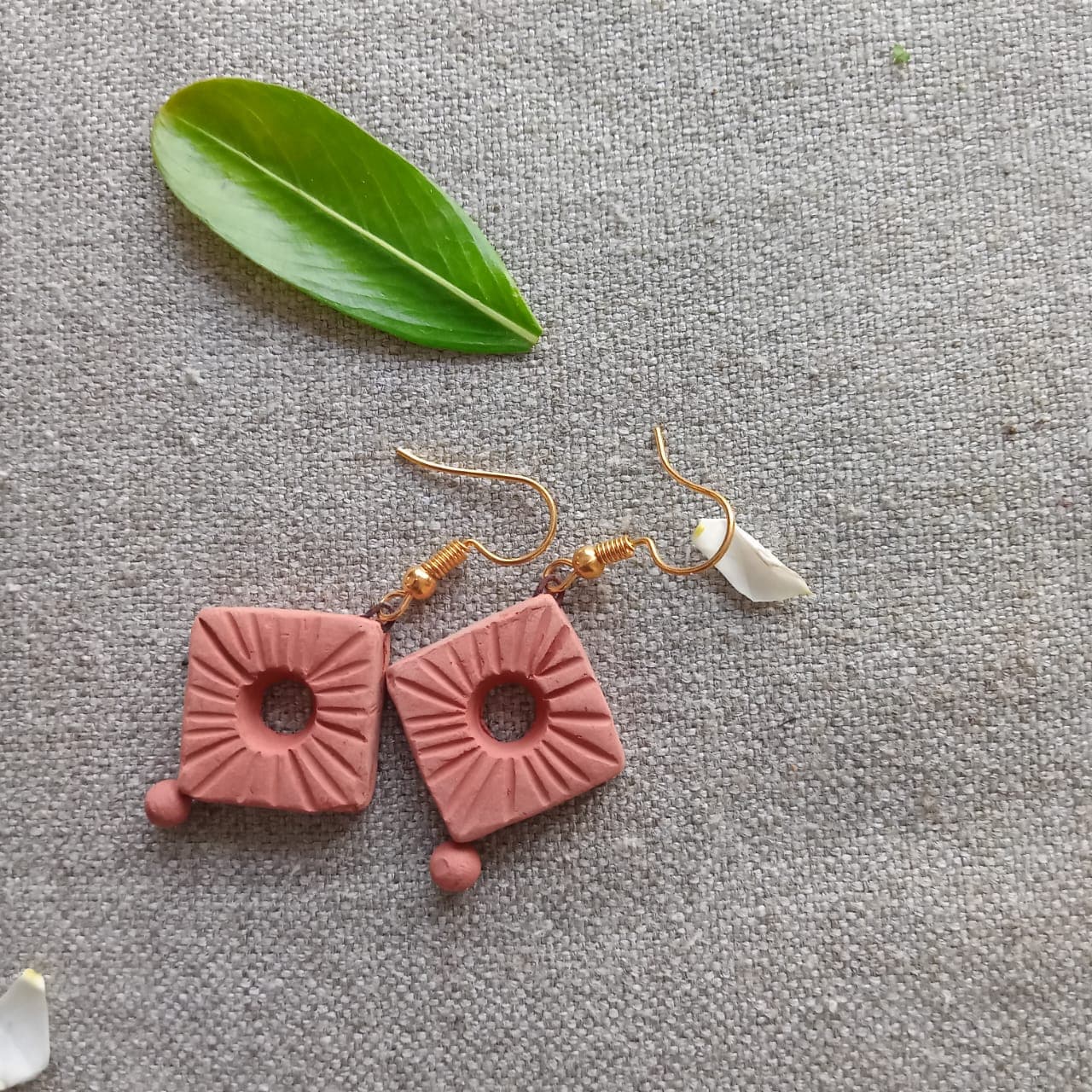
Molela clay work is a relief tradition practised by one community of Kumhar families for centuries — votive panels, deity idols and jewellery, each piece built by hand and never cast from a mould.
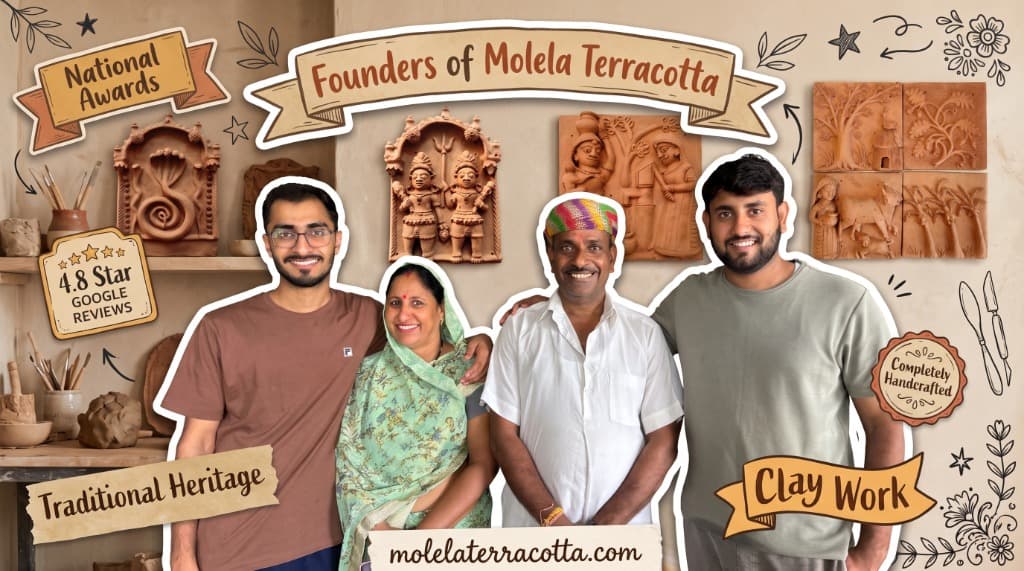
This village relief art goes back eight hundred years. It starts with the old story of Andhkumar in Mewar. Today, only thirty families out of 885 homes still shape these panels. That is why the Geographical Indication badge matters so much. It guards the makers who never quit. Dinesh Chandra Kumhar has worked here for fifty-one years. He is the fifteenth generation in his line. He learned the trade right beside his father, Padma Shri Mohan Lal Kumhar. Now his wife Kailash Devi and sons Umesh and Mohit carry on the work.
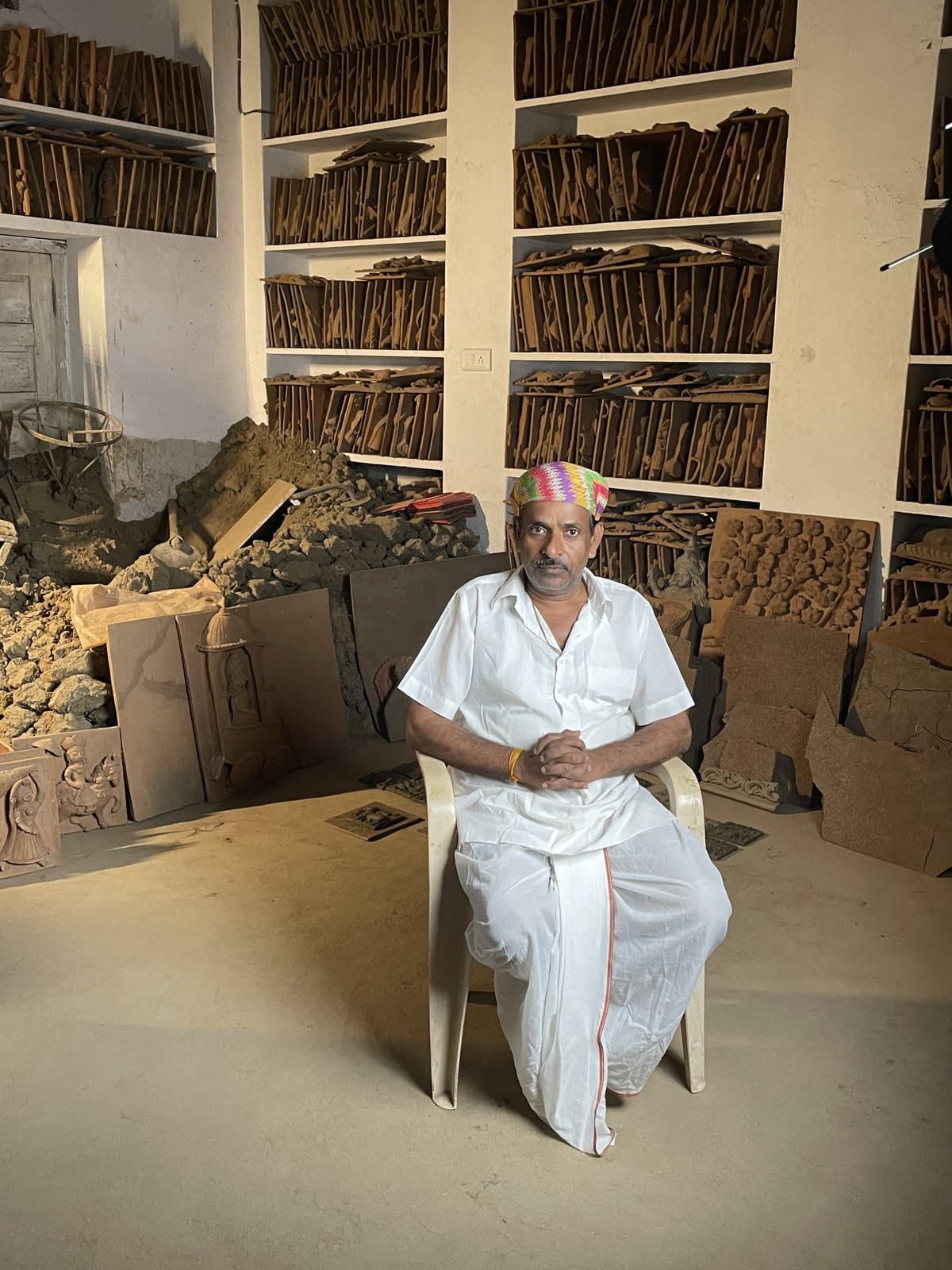
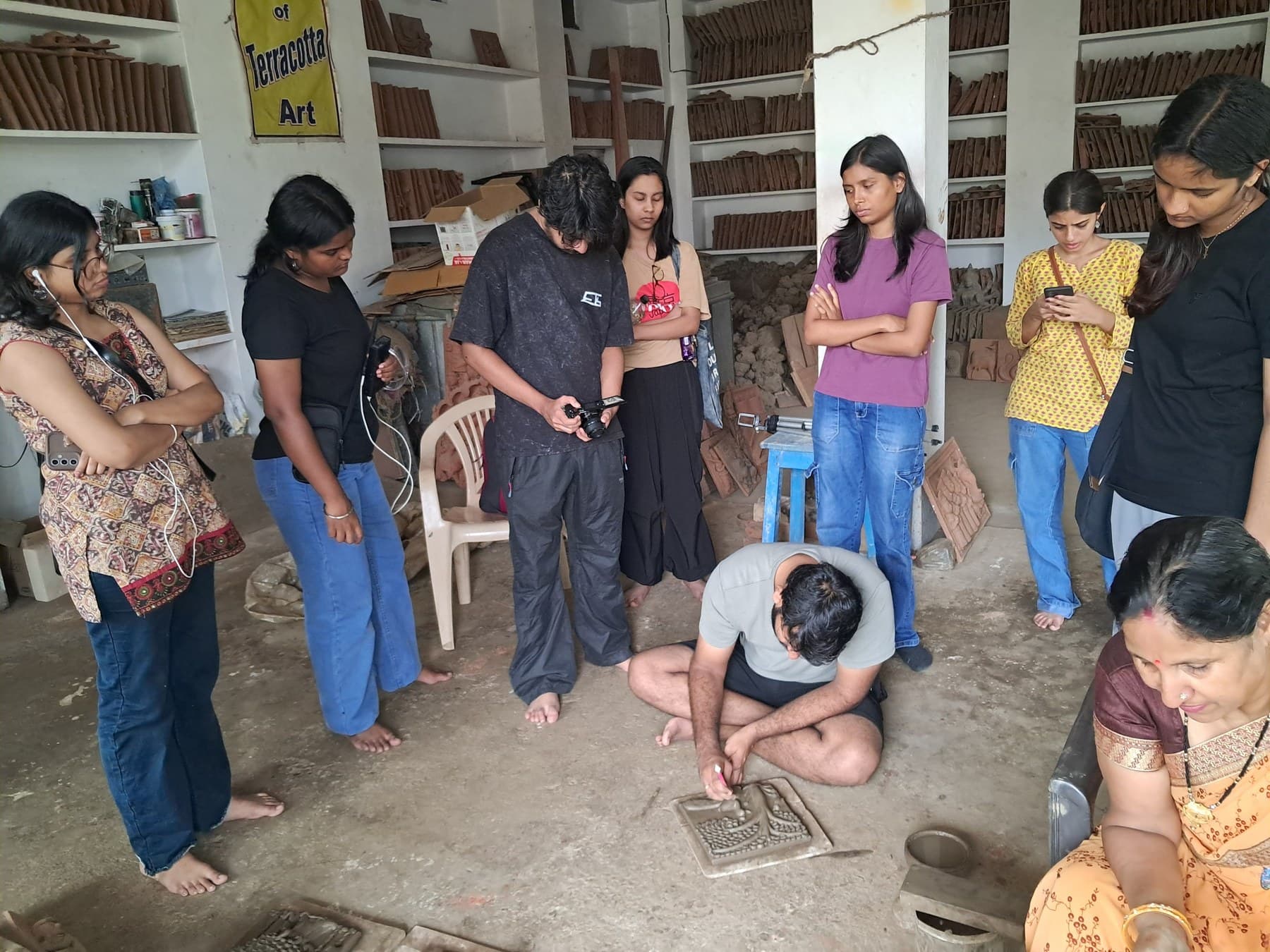
Hand-shaped on the floor. Dinesh Chandra Kumhar keeps this 800-year GI heritage alive.
Community & Studio.
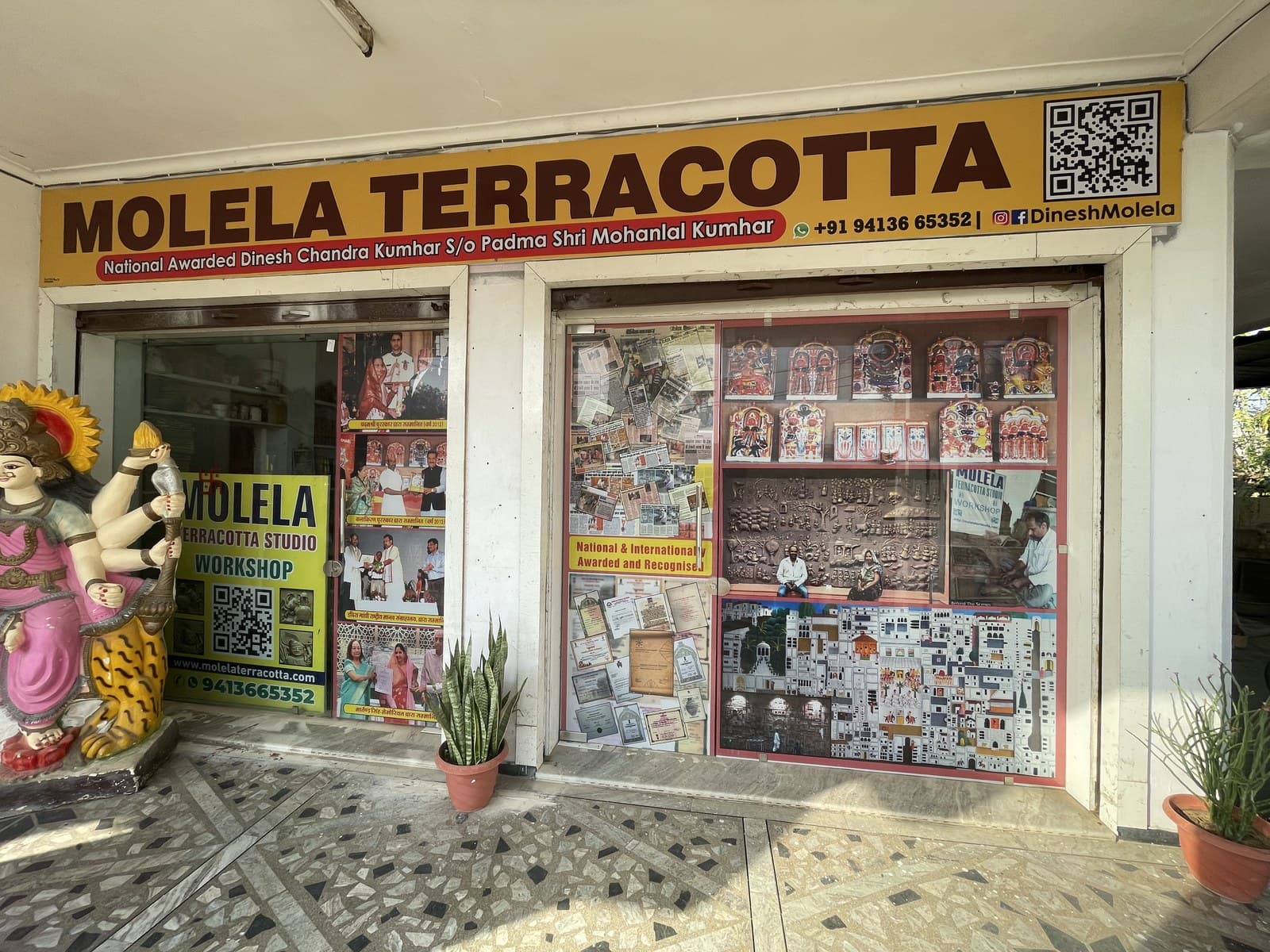
We welcome guests, students, and art lovers to our village gallery and studio.
What we make.
Browse by collection.
Eight hundred years of one hand method. We apply it to large wall murals, shrine plaques, and small rings. Every work is hand-built and wood-fired in our courtyard.
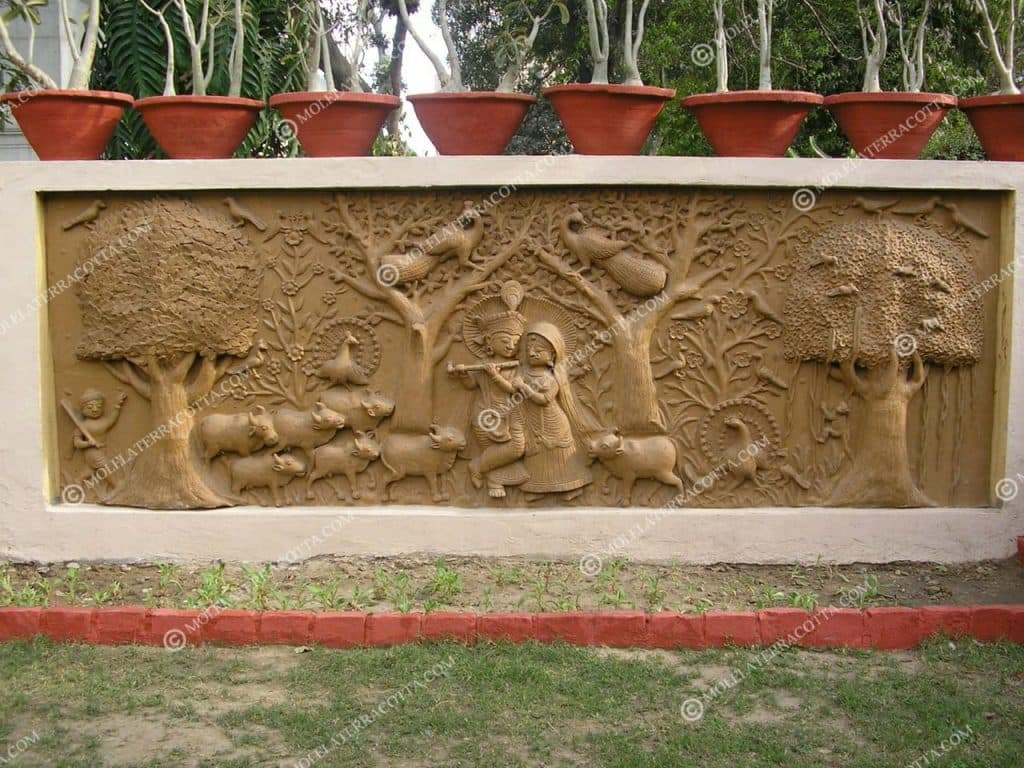
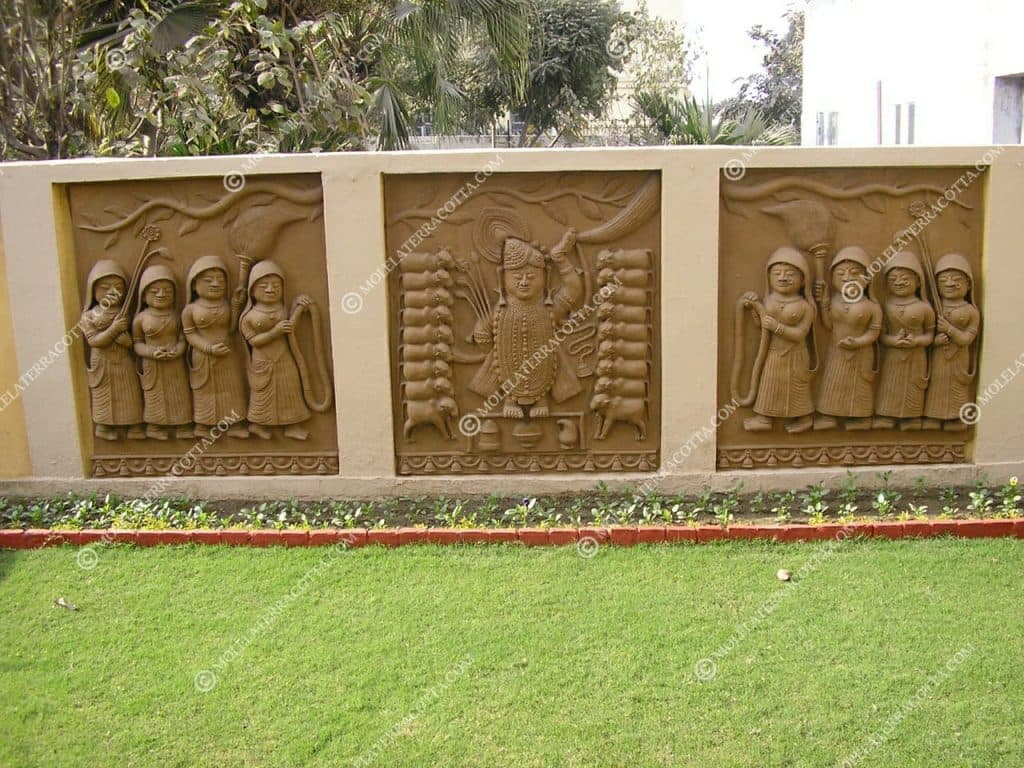
Not every piece here is a small plaque you can hold. We built these large reliefs in parts and baked them in our wood kiln. Then we set them right into garden walls at client homes.
Krishna and Radha with the herd. One long relief set into a garden wall.
Shrinathji between two side panels of gopis. A three-part wall work.
The Hand Method, Folk Stories & Wall Art of Our Mewar Studio.
Published · Updated · Reviewed by Master Artisan Dinesh Chandra Kumhar (National Awardee, 51 Years Experience, Lineage of Padma Shri Mohan Lal Kumhar).
For eight hundred years by the Banas River in Rajsamand near Udaipur, the Kumhar potter community has kept a rare art alive. We do not use potters' wheels or plaster moulds. Every relief panel is shaped by hand on our courtyard floor. We call this freehand hollow technique pola work.
1. River Earth & Natural Fiber Mix.
Each plaque starts with fine river silt from seasonal ponds near the Banas stream. We dry the raw earth in the sun and crush it with wood mallets. Then we sieve out small stones and knead the mix by foot with water. A small share of dry organic fiber gives the wet paste extra strength. Tiny air vents let steam escape in the hot kiln so panels never crack. Fire turns the earth a warm rust red that art buyers love.
2. Freehand Hollow-Relief (Pola) Shaping.
Makers press a flat base slab on the floor and raise a neat outer rim. We build up bold figures using pinched coils and hollow air spaces. Because each god, horse, and rider is hollow inside, wide wall murals stay light to hang. They also bake evenly from edge to center. We carve fine crowns, lotus leaves, and eyes with three simple tools. These are the flat wood beater, smooth stone, and sharp point.
3. Open Bhatti Wood Firing & Earth Slips.
First, the wet slabs dry slowly in the shade for ten days. Next, we stack them upright in a round open kiln called a bhatti. We cover the pile with broken shards and dry wood fuel. The fire reaches 850°C and bakes the reliefs hard as brick. Once cool, many wall murals stay in raw warm earth tones. Votive shrine plaques get mineral red and white slips sealed with a clear glaze.
4. Sacred Deities, Folk Tales & Custom Murals.
For ages, Bhil, Gujjar, and Mina families came here every winter to bring home shrine plaques of Devnarayan and Bhairava. Padma Shri Mohan Lal Kumhar and his son Dinesh Chandra brought this village craft to world museums. Today our family studio shapes custom multi-panel wall art, Krishna Leela scenes, and Mridika jewelry. We ship directly to homes, hotels, and art collectors across India and the world.
Frequently Asked Questions.
Common Questions About Our GI-Tagged Mewar Craft.
Quick answers about our 800-year heritage, custom wall orders, outdoor care, and studio tours.
What is this Mewar hollow-relief art and why is it rare?
It is an 800-year-old GI-tagged (GI-67) hollow-relief craft from Rajsamand near Udaipur. We never use factory moulds or wheels. Instead, we press each flat slab by hand using river earth. We hollow out the back of every figure before baking it at 800°C.
Who are the master makers behind our family studio?
The Kumhar family leads this work across an unbroken 15-generation line. Master artist Dinesh Chandra learned beside his late father, Padma Shri Mohan Lal. Today, Dinesh works daily with Kailash Devi, Umesh, and Mohit in the same courtyard.
Can I order custom wall murals for a home, villa, or hotel?
Yes, we make custom multi-panel wall art to fit your exact wall size. Sizes range from two-foot frames to twelve-foot wide scenes. Popular themes include folk life, Krishna Leela, royal parades, and local shrines.
Are kiln-fired relief panels safe for outdoor walls?
Yes, high-heat wood firing makes each slab strong against hot sun and dry air. For outdoor walls facing heavy rain, we brush on a clear water coat. This keeps damp air out so the earth tones stay bright for decades.
How can I visit the studio workshop near Udaipur?
Our village sits in Rajsamand, about 45 km north of Udaipur and 15 km from Nathdwara. Guests can tour our courtyard gallery any day of the week. You can watch live work on the floor or join a hands-on session.
How do I buy authentic pieces or book a custom order online?
You can browse our catalog on this site and message us on WhatsApp (+91 9413665352). We ship safe wooden crates across India and abroad. You can also order DIY home kits right from our online shop.
“The hollow-relief terracotta murals we commissioned for our luxury villa project in Alibaug arrived in pristine condition. The depth of the hand-sculpted relief and the authentic earthy Banas river clay texture brought the courtyard wall to life. Our clients were deeply moved by the living heritage.”
Priya Sharma
Principal Interior Architect, Mumbai
★★★★★January 2026
12-Foot Krishna Leela Reception Mural
“Working directly with master artisan Dinesh Chandra Kumhar was an honour. He created a magnificent 12-foot multi-tile Krishna Leela mural for our reception lobby. Every single guest stops to admire the intricate hand-sculpted details, and the pre-numbered tiles made on-site installation seamless.”
Vikramaditya Rathore
Heritage Resort Director, Udaipur
★★★★★November 2025
Lord Dharmraj Sacred Votive Plaque
“Authentic GI-67 certified Molela art directly from the hereditary Kumhar family. The hollow-relief plaque of Lord Dharmraj is the spiritual centerpiece of our home temple. The packaging was bulletproof with reinforced wooden crating—zero damage all the way to Delhi.”
Ananya Sen
Art Collector & Interior Stylist, New Delhi
★★★★★October 2025
Terracotta Workshop Kit & Masterclass
“The terracotta workshop clay kits and live demonstration conducted by Dinesh Kumhar gave our design students an invaluable deep dive into an unbroken 800-year living craft tradition. The prepared alluvial clay quality and wooden tools are genuine master-grade materials.”