Traditional Terracotta Clay Art Gallery
Explore authentic GI-tagged Molela terracotta deity plaques, sacred Devnarayan and Dharmraj idols, and votive folk clay sculptures handcrafted in Rajasthan.
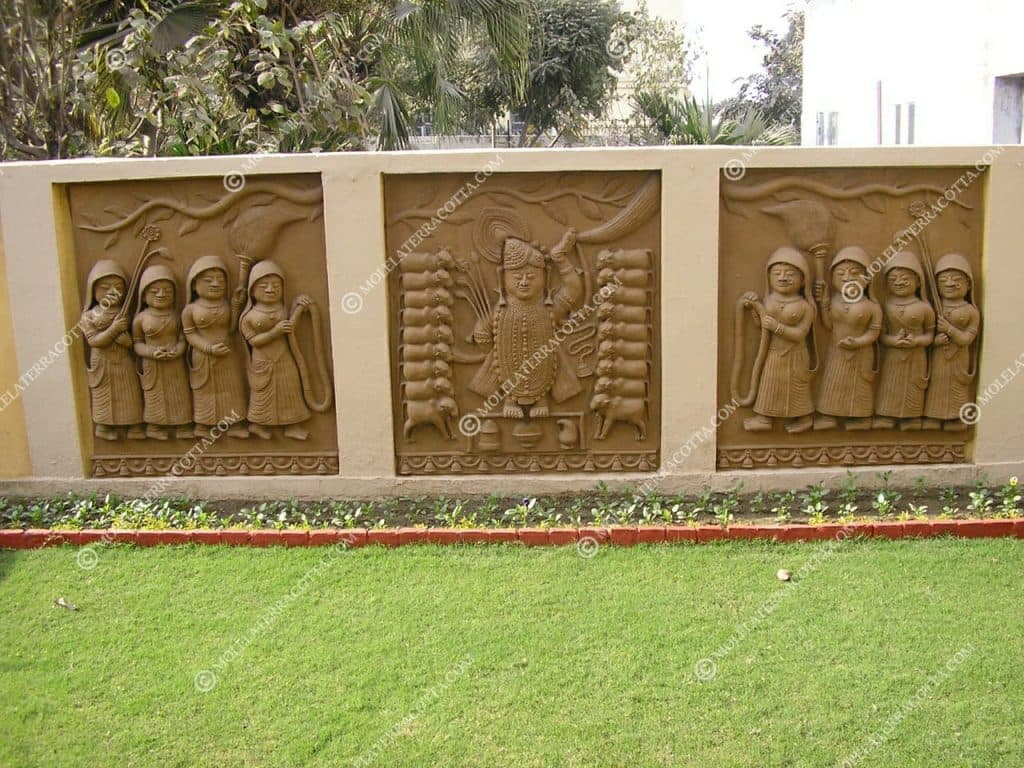
The 800-Year Sacred Tradition of Molela Terracotta Art
In the heart of southern Rajasthan, the potters of Molela have preserved an unbroken 800-year-old sacred terracotta tradition. Unlike everyday pottery, the village’s signature art is the creation of sacred votive deity plaques (Moorats or Devnarayan & Dharmraj plaques).
Every year during the auspicious month of Magha (January–February), tribal communities—including the Bhil, Mina, Gurjar, and Rabari pastoralists—travel hundreds of kilometers on pilgrimage to Molela. Guided by their village shamans (Bhopas), they commission sacred deity plaques to enshrine in rural temples (Devalas) to protect their families, cattle, and crops.
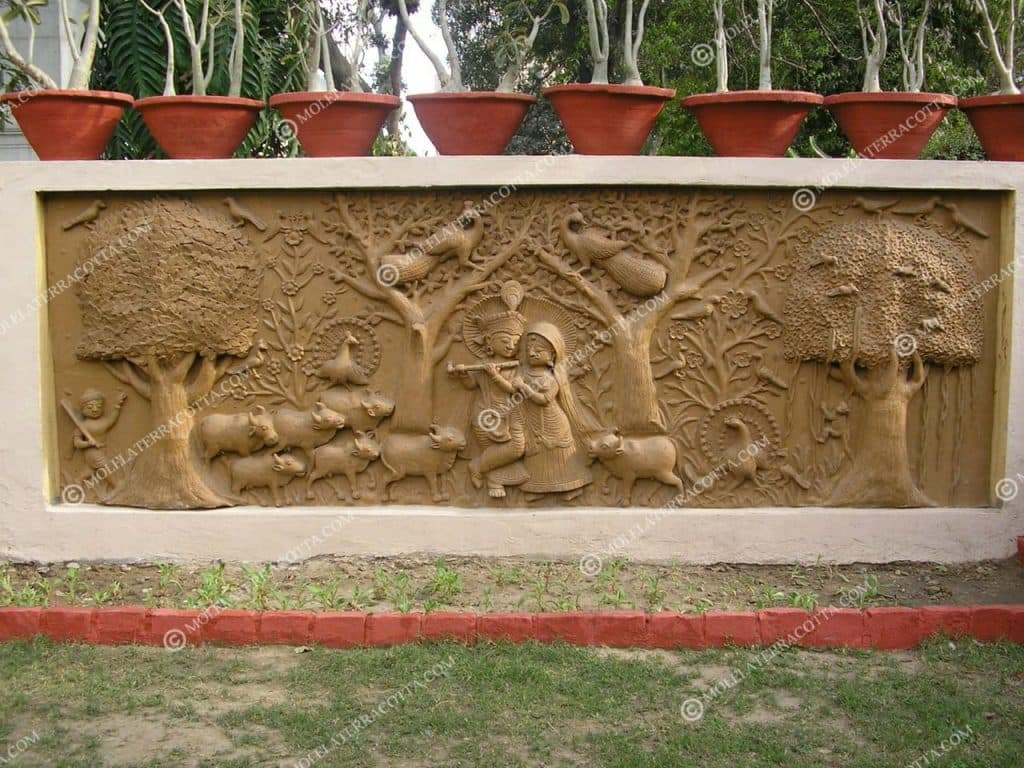
Iconic Deity Plaques & Sacred Folk Iconography
Each traditional deity plaque features a codified visual language of symbols, guardian animals, and celestial emblems deeply rooted in folk mythology, also explored in our Krishna Leela clay art gallery:
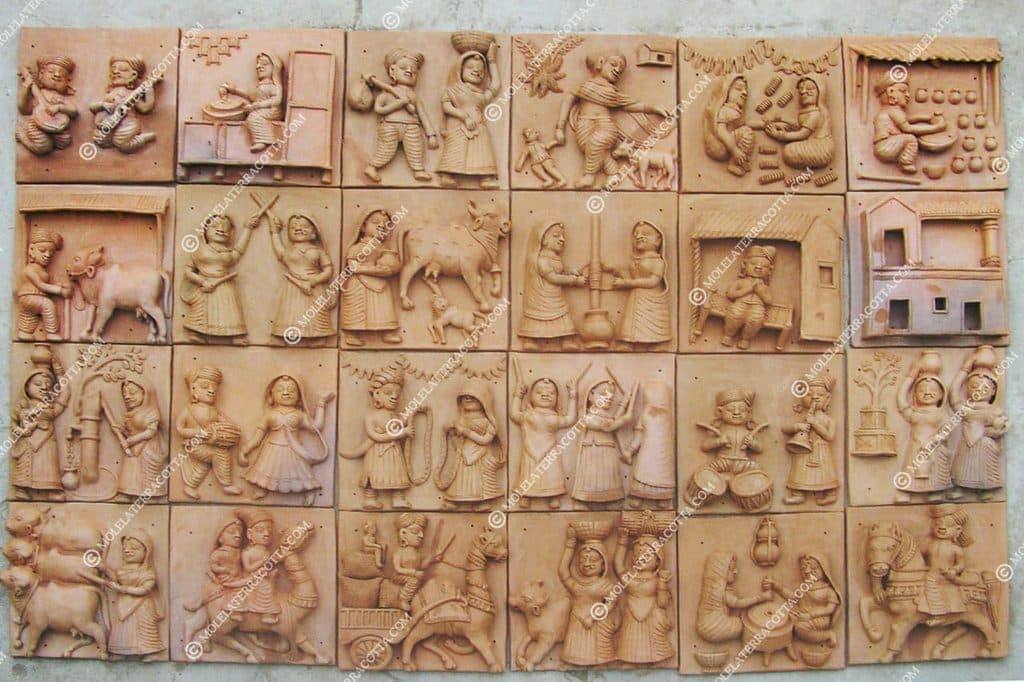
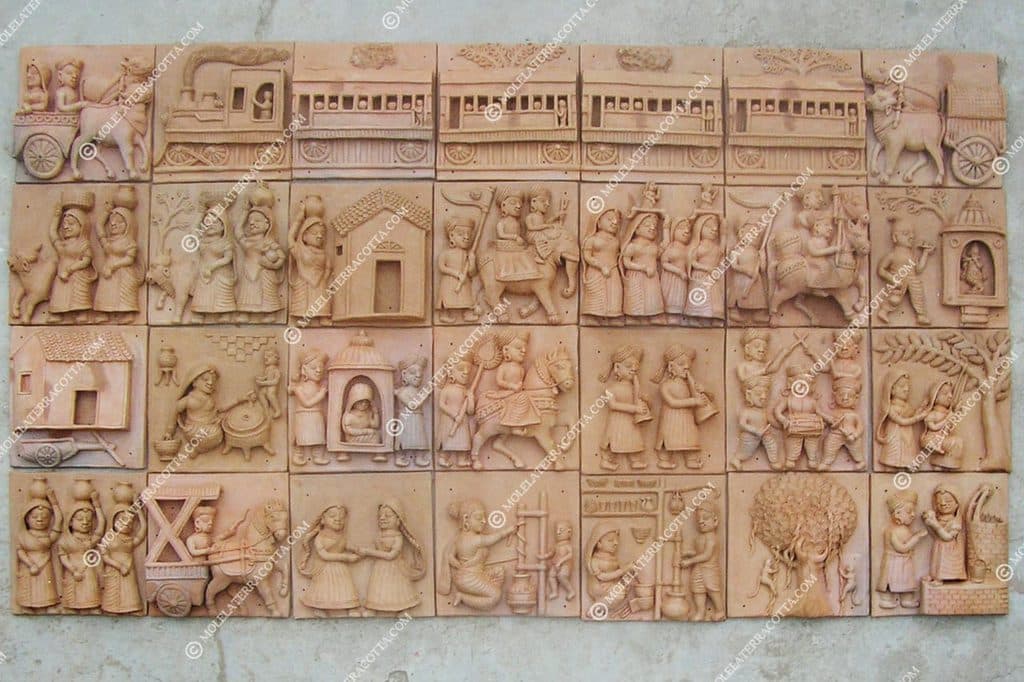
- Dharmraj (Devnarayan): The supreme folk incarnation of Lord Vishnu, depicted majestically seated on his loyal horse, surrounded by a dog, peacock, serpent (Nagdev), and celestial sun and moon.
- Kala-Gora Bheru (Bhairav): The twin guardian manifestations of Lord Shiva—Kala Bheru holding sword and skull, and Gora Bheru holding lotus and trident—worshiped for protection from negative forces.
- Chamunda & Amba Mata: Formidable Mother Goddesses riding lions and tigers, wielding sacred weapons to vanquish obstacles and bestow prosperity.
- Takaji & Nag Devta: Serpent deities revered by agrarian and pastoral tribes for fertility of the soil and protection against snakebite.
- Surya Dev & Surya Rath: The radiant Sun God riding a chariot pulled by seven galloping horses, symbolizing life-giving vitality and cosmic truth.
Sacred Clay Crafting & Traditional Ground Kiln Firing (*Aav*)
The crafting of traditional deity plaques is a ritualistic discipline. Artisans dig fine alluvial clay from the Solakiyan Talao and mix it with donkey dung (gadhe ki leed) to impart plasticity, prevent cracking, and ensure porosity—a method documented in our Molela clay work study.
Working on flat clay slabs (thala), the sculptor models the deity figures hollow (khokhla) using simple wooden spatulas (baldi). Once sun-dried, the plaques are carefully stacked in open-air ground kilns (aav) covered with cow dung cakes, straw, and earthen potsherds, and fired slowly at 700°C–800°C.
Traditional votive icons are subsequently consecrated and painted with vibrant mineral colors (geru, khadiya, and bright enamels), while contemporary art collectors often prefer them in their raw, unpainted earthen terracotta patina.
Preserving Heritage in Contemporary Homes & Collections
While remaining deeply sacred to regional tribal communities, Molela’s traditional terracotta art has gained international acclaim in museums, design biennials, and art galleries worldwide. Today, these plaques grace contemporary living spaces, entry foyers, and private shrines as magnificent emblems of indigenous Indian art and timeless spirituality. Explore our curated folk art collection and handcrafted wall decor tiles to bring this living heritage into your space.
Frequently Asked Questions
Questions & Answers: Traditional Terracotta Clay Art Gallery
Key insights into traditional techniques, motifs, custom dimensions, and installation.
What is traditional Molela Terracotta Clay Art and why is it sacred?
Traditional Molela Terracotta Clay Art is an 800-year-old GI-tagged sacred craft from Rajasthan. Hereditary potters sculpt votive deity plaques (Moorats) of folk deities like Dharmraj, Bheru, and Chamunda for tribal communities who undertake annual pilgrimages to Molela to commission and enshrine them in village temples.
Who commissions traditional Molela deity plaques?
Traditionally, tribal and pastoral communities including the Bhil, Mina, Gurjar, and Rabari from Rajasthan, Gujarat, and Madhya Pradesh commission the plaques. Accompanied by their priests (Bhopas), they select plaques through ritual divination to consecrate in their ancestral village shrines.
What deities are depicted in traditional Molela clay plaques?
Key deities include Dharmraj (Devnarayan on horseback), Kala-Gora Bheru (guardian forms of Shiva), Chamunda Mata, Amba Mata, Takaji (Nag Devta), and Lord Ganesha.
What is the significance of the sun, moon, and serpent symbols on the plaques?
The sun (Surya) and moon (Chandra) symbolize eternal cosmic balance and timelessness. The serpent (Nagdev) represents protection, regeneration, and the vital energies of the earth.
Are traditional Molela deity plaques painted or natural terracotta?
Both. In tribal rituals, plaques are traditionally painted with bright mineral and enamel colors (red, yellow, green, and silver). For modern home decor and architectural installations, plaques are celebrated in their natural, unpainted terracotta rust finish.
Can I order authentic traditional Molela deity plaques directly from the master artisans?
Yes. Master artisan Dinesh Chandra Kumhar and his family craft authentic traditional deity plaques on order in both natural terracotta and traditional painted styles, available through our online shop and shipped securely across India and worldwide.
Order this theme in your size
Clay craft in this theme is prepared on an order basis and in custom dimensions. Send your wall area or farmhouse measurements and we will quote for it.